Posts

Manager or Leader? The Slim View
Image
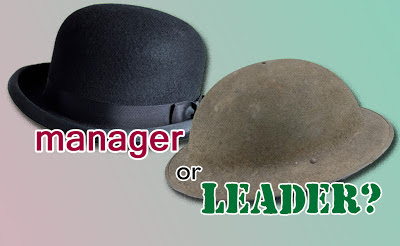
In the field of management science and in organisational development in particular we often talk about the differences between managers and leaders. Every now and then I come across great little snippets and insights from outside the field that add to the conversation. And here is one of those from the field of military history, a place to which my reading commonly wanders and where the rich tapestry of leadership is a theme that is commonly discussed. Less common though is for this field of study to throw up a direct comparison between leaders and managers.  The British General William 'Bill' Slim was the master of successful military campaigns against the Japanese in the Far East during the Second World War and the leader of what is often called the "Forgotten 14th" Army. Slim, with excellent credentials of success both in terms of strategy and leadership saw a keen difference between leaders and managers. Slim's comparison runs as follows: "The lea...

Left brain? Right brain? Change the paradigm

Image
Technical excellence. You strive for it, you study for it. Ever since that first day at school when they opened the top of your head and started pouring in all those facts, algorithms, rules, dates, ratios, laws and equations you have been building the extreme specimen of technical genius that you are today. Technical knowledge is essential, it is the bedrock of our physical world, and for year upon year you have strived to improve your mastery of it. Technical excellence is important for all sorts of reasons, but at the most basic level it is important because it gives us power. It gives us power to speak with authority on our chosen area of excellence. It gives us power to get our foot in the door of that job we are seeking, it gives us power to earn reward and recognition, and it gives us power over other people. Neuroscientists are technical experts. They have power over me. The power I assign to them means that I believe them when they talk to me about the way the brain ...

Understanding SPECTRUM

Image
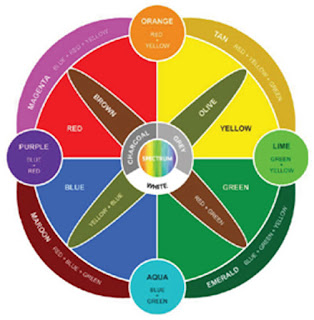
This blog post is in support of the SPECTRUM evaluation tool available online from www.evaluationstore.com . Although just one of a number of profiling tools available, SPECTRUM was initially designed for Evaluation Store by Poppyfish Associate Steve Jarrett and benefits from being one of the more affordable profiling tools for those taking their first steps with this approach.   What is SPECTRUM? One of the key ways that learning and development programmes can promote organisational development is through changed individual behaviours. As we develop new skills and new awareness so we change our behaviour to achieve better outcomes. The SPECTRUM™ questionnaire provides you with valid information about your own behavioural preferences and your impact on the people around you.   What is behaviour? Behaviour can be defined as the combination of what you do, what you say, how you say it and what facial expressions and body language you use in the process. ...

Durkan LEAD

Image
Poppyfish People Development is pleased to be partnering the construction company, Durkan Limited, in its new LEAD initiative which gets underway in June. The company wide Durkan LEAD programme will see all 160 employees embark on a pathway of learning and development that is designed to maximise individual potential and generate continuous performance improvement across the firm. Each Durkan employee will be enrolled on one of three learning pathways, each following a personalised structure that will see a number of compulsory events supplemented by additional optional events that the employee can choose to attend. Employees that complete all compulsory courses and an appropriate number of optional courses will be entitled to receive a 'Durkan Diploma' in recognition of their learning. “ We are very pleased to be able to offer this exciting new opportunity to our staff ,” said Ian Cresswell, Director of Health & Safety, Quality and Environment at Durkan, “ we fee...

Pandemic Simulator

Image
Pandemic is a Poppyfish business simulation and management learning exercise designed to help organisations to understand the possible consequences of an outbreak of pandemic flu. The simulation involves participants managing a number of realistically structured and interactive departments, business units or teams through a pandemic cycle, juggling resources to maintain operations and deliver objectives. Run as a one day phased decision making exercise Pandemic uses data on infection rates from the UK Dept of Health and NHS but is tailored specifically to the organisational hierarchy of the client organisation. Learning objectives The learning objective of this simulation is that by the end of the session participants will have negotiated their organisation through a 15 week pandemic cycle and will understand more about the impact that an event such as a pandemic flu outbreak could have on their workplace. The simulation is primarily about strengthening organisational resilience ...

Resilience - sometimes it just IS cricket.

Image
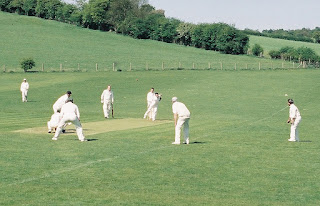
The legendary Australian fast bowler, Jeff Thomson, had a great way of putting things. 'Tommo', who alongside the equally fearsome Dennis Lillee spearheaded one of the most infamous fast bowling attacks that the planet has ever seen, isn't really one for management speak. "Pushing the envelope" or "touching base" are not really his style. Tommo liked to ply his trade the direct way: "The sound of the ball hitting the batsman's skull was music to my ears" This famous quote starts off this seasonally inspired post. In the spring time the passions of all true men turn to that noblest of sports - cricket. All across this noble isle dreams of smashing centuries at Lord's come creeping into the minds of men of a certain age as they attempt to reconnect with their youth by squeezing their increasingly rotund frames into their musty old cricket whites and puffing their red faces around the village green. Think of the village cricket match...

Behaviour Change - old habits die hard

Image
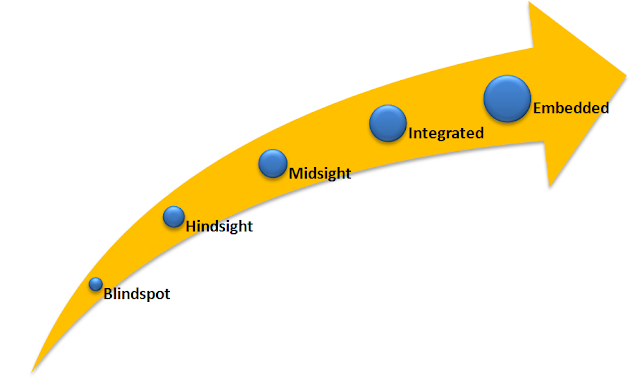
Ever wondered why giving up that bad habit is so hard? This short entry looks at behavioural change and is driven by a piece of work I have been doing with one of my clients. Our habits – good and bad - are embedded behaviour that we have been slowly adapting throughout our lives. Changing habits is difficult and requires commitment. There is a saying that habits cannot be thrown out of a second floor window. Instead, they must be coaxed patiently downstairs and out through the door. This takes time, and it takes application. But above all else, it needs us to realise that change is needed.   The change curve diagram on this page (with kudos to Martin Saville who first ran through this with me as I began my own change journey) shows us the path of behavioural change. To complete any behavioural change we must move from being unaware of the need to change, and on through a commitment to change towards a complete embedding of the new behaviour. Easy eh? ...