Posts

Showing posts with the label decision making

Five Star Values for Critical Incident Survival
Image
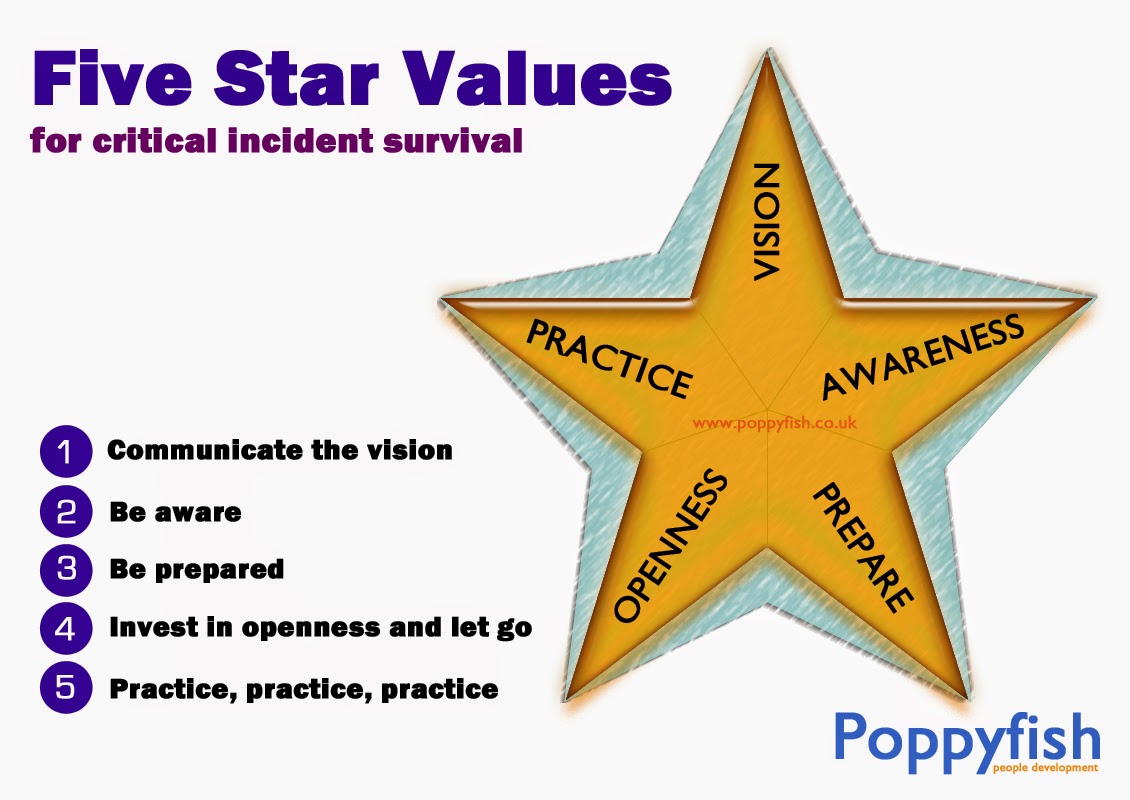
I've written and spoken about it so many times that to some people I must be starting to sound like a cracked record. But just in case this is completely new to you then let me crank the gramophone handle one more time.... The most amazing thing about critical incidents that impact organisations is not that they happen but that they do not happen more often. Turn on the news and you'll find one in an instant. Right now, somewhere in the world, an organisation is experiencing a critical incident. And you only have to look at the "Wall of Terror" below to see some potential consequences. So if there is a certain inevitability surrounding the fact that the organisation that you work in will experience a critical incident then what can leaders do to ensure that their organisation will survive?  Here's our suggested top 5 values, attitudes and behaviours: Communicate the vision Organisations that keep going through critical incidents have a strong...
How we learn from critical incidents

Image
The tragic and ongoing story of Malaysia Airways flight MH370 has few positives. At the time of writing it appears highly likely that the aircraft, which disappeared on 8 March as it flew from Kuala Lumpur to Beijing, ditched somewhere in the sea off the SW coast of Australia, many miles off course  from it’s planned route. No wreckage has been found and there has been no communication with any of the 239 people listed as being on board. No reason for the massive deviation in the flight plan or the loss of communication has been provided. What continues to unfold is a fascinating and disturbing tale that has flummoxed just about everyone. But what we have already experienced as part of this story helps us expand our understanding. And here's how. As humans we rely on our skills of pattern recognition to make sense of the world around us. When stories and events unfold we look to the validity of our own experience to assess the situation against our own memory banks of data, h...

You don't have to be a Jedi to work here, but it helps

Image
We've all seen it. It's one of the most famous cinema sequences of all time. Luke Skywalker is hurtling at high speed along the narrow canyon around the Death Star. On his shoulders rests the last hope for a bright future for the galaxy. If he succeeds in targeting his torpedo on the tiny exhaust port target then the explosion will cause a chain reaction that will lead to the destruction of the Empire’s most deadly weapon. Skywalker will be a hero and his friends will live. Should he fail, his friends will suffer a terrible fate and the rebel base will be destroyed, plunging the galaxy into endless torment and suffering at the hands of the evil Emperor and his even more sinister minions. Tough call. Skywalker is piloting a state of the art space ship, crammed with targeting systems and computer guided what-nots designed by experts to maximise the chances of the all important direct hit. Others have tried to hit the exhaust port before him, but all have failed. Now, with t...

Pandemic Simulator

Image
Pandemic is a Poppyfish business simulation and management learning exercise designed to help organisations to understand the possible consequences of an outbreak of pandemic flu. The simulation involves participants managing a number of realistically structured and interactive departments, business units or teams through a pandemic cycle, juggling resources to maintain operations and deliver objectives. Run as a one day phased decision making exercise Pandemic uses data on infection rates from the UK Dept of Health and NHS but is tailored specifically to the organisational hierarchy of the client organisation. Learning objectives The learning objective of this simulation is that by the end of the session participants will have negotiated their organisation through a 15 week pandemic cycle and will understand more about the impact that an event such as a pandemic flu outbreak could have on their workplace. The simulation is primarily about strengthening organisational resilience ...

Step aboard the Time Machine

Image
Ask anyone what they would do if they could travel in time and sooner or later someone will tell you they would go forward to the next lottery draw date, so they could return to the present day and buy the winning ticket. This week the Euromillions lottery is another roll over. Visualising the future isn’t easy. But never mind our own fanciful dreams of lottery riches, for managers and leaders creating strategy in today’s organisations seeing into the future is an essential skill, yet developing this foresight can be incredibly difficult. Taking the brave first steps now in a change programme to move your company towards an uncertain future can be even harder. How can we know what the future will hold? If only we could travel through time. If only we had a machine to take us there…. In Poppyfish simulations the scenario is our vehicle to the future. Climbing aboard a simulated exercise that projects your business into the future can be the vehicle that enables our expl...

Biodecision: The First Workshop

Image
A room full of scientists and technology transfer professionals may not be everyone's idea of a fun filled afternoon but anyone who attended the first Poppyfish Biodecision Simulation Workshop earlier this month would hopefully agree with me when I say that what was shared that afternoon was informative, fun and filled with learning.   This proof of concept workshop for Biodecision was the first time that this particular workshop had been held and took place at Rothamsted Research with the support of  InCrops .  Aims The aim of the Biodecision workshop is to create a system in miniature and to explore how people and organisations within the system interact and make decisions. The system in question is the commercialisation system for new technology. In this instance we chose fictional patented developments associated with the fictional biofuel, 'Cropanol', but this topic could vary depending on the audience. We split the fifteen delegates into s...

New Simulation Unveiled: BIODECISION

Image
We are pleased to announce that our new simulation, BIODECISION , is now at the pilot stage. Commercialisation strategy is one of the key decisions faced by start up companies in the biotech arena. This simulation aims to demonstrate the various decision points and processes that biotech start up companies and entrepreneurs may face when developing their technology. It also aims to raise awareness of individuals own mental models and how they may shape our behaviours, our perceptions of others and, most crucially, the decisions we make.   Thanks to support from the Incrops project, Poppyfish will be running a free to attend pilot version of this latest workshop at Rothamsted Research on 12 th December 2012. Anyone wishing to attend is invited to contact enquiries@poppyfish.co.uk or contact Rothamsted Research . Additional information is available on the main Poppyfish website     What form will the simulation take? The simulation takes the form o...

The X factor

Image
My 10 year old daughter was not impressed. For the third week running the judges on the hit ITV show X-Factor had reached 'deadlock' , where the four person panel had a split vote on which of the  contestents would go out of the competition that week. Instead, under the rules of the competition, the fate of the apparently equally awful contestants would be decided by referring back to the public telephone vote. Now, I'm not a massive fan of the X-factor, or of reality style TV shows on the whole to be honest, and there is always a side of me that sides with the sceptics who say that nothing happens by chance in television, but for me there was something about this situation that raised my interest. Let's assume, for the moment at least, that the situation that the judging panel found itself in was not contrived. How come they had once again got themselves into a situation where the decision did not rest with them, but with some outside 'higher agency' (ie...

Business Continuity as a form of OD

Image
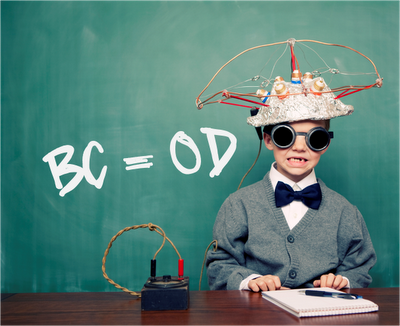
Is Business Continuity a form of OD? It's a bit early in the week to wire up  "The Cogitator" and consider the world of OD through my own particular lens, but as I am delivering a Business Continuity decision making exercise this week I wanted to stop for a moment to consider the connection between Business Continuity and Organisational development. Does BC = OD? Simulations provide a key opportunity for learning and offer an opportunity to analyse decision making in a safe environment and are an excellent tapestry for personal development, yet few relatively few organisations choose to run decision making exercises for this purpose. In the field of L&D overall simulations tend to be niche areas, and not always regarded as the first option. I find this rather thought provoking, especially when the role of simulations is so well established in some other areas of organisations. Take for instance the field of Business Continuity. Business Continui...

The OODA loop

Image
Decision making is at the heart of management and leadership. Typically it is a process about closing the gap between where we are and where we want to be.   The process can be simplified as follows: Once we decide , we   act . After acting, we monitor the results of our actions. Finally, we evaluate the results we’ve monitored. This can be presented as a Decision Execution Cycle (DEC) shown below: Decision Execution Cycle There is nothing complicated about this. The DEC is a common sense approach that few would argue against and many of us will recognise this as being valid for most organisations. Its simplicity is central to its success, but to throw a different light on this I want to introduce the concept of a similar but subtly different model for understanding decision making in action – the wonderfully titled "OODA loop".   The OODA Loop One of the most interesting and fascinatingly simple models in the study of how people actua...