Posts

Showing posts with the label self knowledge

You don't have to be a Jedi to work here, but it helps
Image
We've all seen it. It's one of the most famous cinema sequences of all time. Luke Skywalker is hurtling at high speed along the narrow canyon around the Death Star. On his shoulders rests the last hope for a bright future for the galaxy. If he succeeds in targeting his torpedo on the tiny exhaust port target then the explosion will cause a chain reaction that will lead to the destruction of the Empire’s most deadly weapon. Skywalker will be a hero and his friends will live. Should he fail, his friends will suffer a terrible fate and the rebel base will be destroyed, plunging the galaxy into endless torment and suffering at the hands of the evil Emperor and his even more sinister minions. Tough call. Skywalker is piloting a state of the art space ship, crammed with targeting systems and computer guided what-nots designed by experts to maximise the chances of the all important direct hit. Others have tried to hit the exhaust port before him, but all have failed. Now, with t...

Job Maps

Image
Example Job map: Building Site Manager A Job Map is a diagram, created by you, that shows the interconnections between your job and the people who have an expectation of you in your job. It can be a very helpful tool for understanding and clarifying your role and priorities at work and as a tool for problem solving. It is especially helpful when used as a tool to aid recruitment, or to assist someone starting a new job. A good job map can be used to:   Give a clear indication of key responsibilities. Make it clear to others exactly what it is that you do. Identify and tackle problem areas. Help produce a job description and be useful when setting objectives. When you combine your own map with the job maps of other people in your teams you may also be able to: Identify common problems. Highlight areas where efforts are duplicated or confused. Spot important new areas of work or gaps in existing responsibilities.   Sharing your Job Map ...

Left brain? Right brain? Change the paradigm

Image
Technical excellence. You strive for it, you study for it. Ever since that first day at school when they opened the top of your head and started pouring in all those facts, algorithms, rules, dates, ratios, laws and equations you have been building the extreme specimen of technical genius that you are today. Technical knowledge is essential, it is the bedrock of our physical world, and for year upon year you have strived to improve your mastery of it. Technical excellence is important for all sorts of reasons, but at the most basic level it is important because it gives us power. It gives us power to speak with authority on our chosen area of excellence. It gives us power to get our foot in the door of that job we are seeking, it gives us power to earn reward and recognition, and it gives us power over other people. Neuroscientists are technical experts. They have power over me. The power I assign to them means that I believe them when they talk to me about the way the brain ...

Understanding SPECTRUM

Image
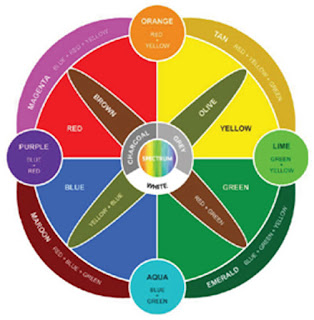
This blog post is in support of the SPECTRUM evaluation tool available online from www.evaluationstore.com . Although just one of a number of profiling tools available, SPECTRUM was initially designed for Evaluation Store by Poppyfish Associate Steve Jarrett and benefits from being one of the more affordable profiling tools for those taking their first steps with this approach.   What is SPECTRUM? One of the key ways that learning and development programmes can promote organisational development is through changed individual behaviours. As we develop new skills and new awareness so we change our behaviour to achieve better outcomes. The SPECTRUM™ questionnaire provides you with valid information about your own behavioural preferences and your impact on the people around you.   What is behaviour? Behaviour can be defined as the combination of what you do, what you say, how you say it and what facial expressions and body language you use in the process. ...

Behaviour Change - old habits die hard

Image
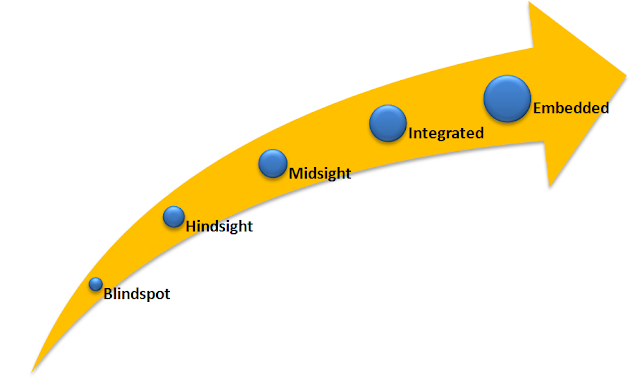
Ever wondered why giving up that bad habit is so hard? This short entry looks at behavioural change and is driven by a piece of work I have been doing with one of my clients. Our habits – good and bad - are embedded behaviour that we have been slowly adapting throughout our lives. Changing habits is difficult and requires commitment. There is a saying that habits cannot be thrown out of a second floor window. Instead, they must be coaxed patiently downstairs and out through the door. This takes time, and it takes application. But above all else, it needs us to realise that change is needed.   The change curve diagram on this page (with kudos to Martin Saville who first ran through this with me as I began my own change journey) shows us the path of behavioural change. To complete any behavioural change we must move from being unaware of the need to change, and on through a commitment to change towards a complete embedding of the new behaviour. Easy eh? ...

Finding your edge

Image
What is it to have 'edge'? I want you to join me in an inquiry into 'edge'. The word 'edge' comes in many forms. My ruler has an 'edge' on it, so does my lawn. Businesses might be described as having an 'edge' over their competitors. We talk about the fact that one candidate might 'edge out' another one at a recruitment interview. I can be 'on edge' when my football team is hanging on to a 1-0 lead with three minutes to go. In all these cases I think I know what the word 'edge' means. But what does it mean when someone asks you what is your edge? That definition is far less clear. This is because the concept of edge at the personal and psychological level is far more than just something which gives you an advantage. It's more elusive than that. True enough, if I 'have an edge over you ' then I have something that allows me to be compared favourably to you, but this is totally different from actual...

Learning How to Learn

Image
 Sometimes I learn fast. Swing one punch and you’ll get me, but swing another and I’ll duck. That’s fast learning. But learning just why it was that you wanted to punch me in the first place takes a little longer. For that to happen I need to learn about you, and I need to learn about me, and I need to learn what it is about our relationship that stimulates the Frank Bruno tendencies in you. Learning comes via action, and learning from that action through the act of reflection. Learning isn’t always easy. It is often challenging. Ever heard the phrase “ I learn most when I’m out of my comfort zone ”? Well, it may be true, but life outside the comfort zone (and maybe I’ll revisit just what a comfort zone is in another blog entry one day) comes with lots of other challenges that might actually restrict learning. I am on a learning journey. I say ‘am’ because I don’t suppose it ever stops. Learning starts as soon as a new born baby learns how to breathe in air and stops, ar...