Posts

Showing posts with the label management tips

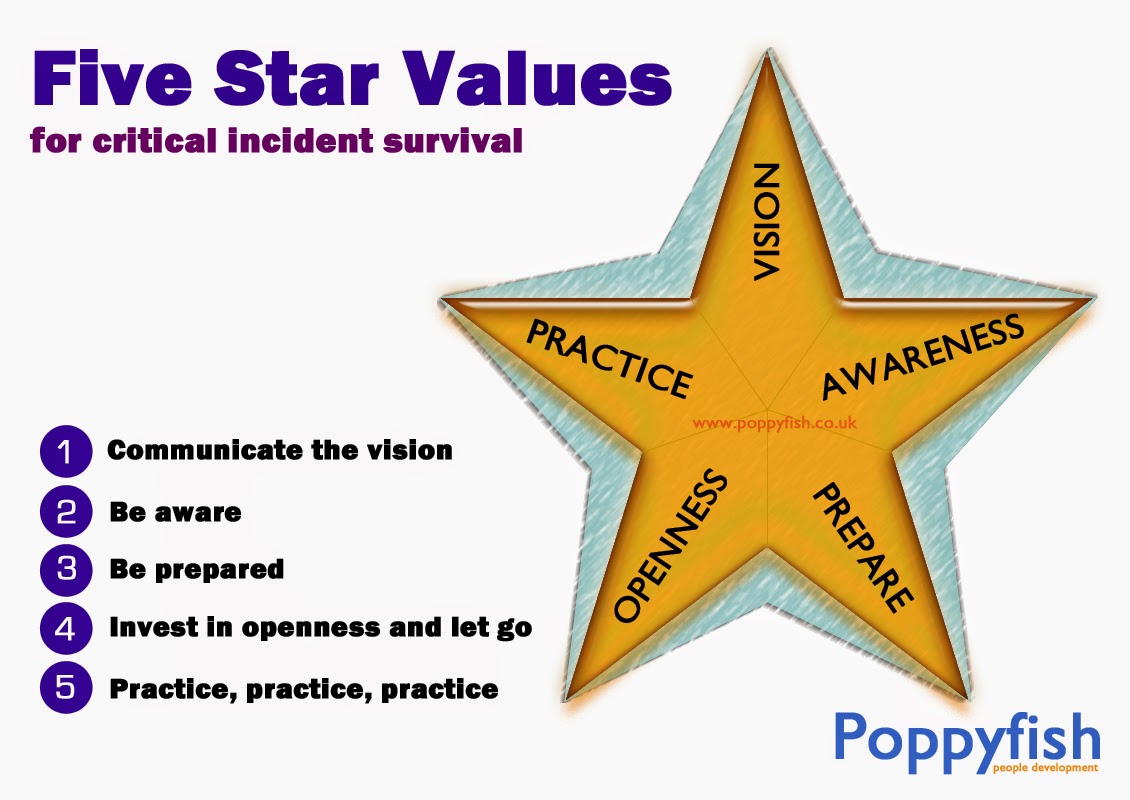
Five Star Values for Critical Incident Survival
Image
I've written and spoken about it so many times that to some people I must be starting to sound like a cracked record. But just in case this is completely new to you then let me crank the gramophone handle one more time.... The most amazing thing about critical incidents that impact organisations is not that they happen but that they do not happen more often. Turn on the news and you'll find one in an instant. Right now, somewhere in the world, an organisation is experiencing a critical incident. And you only have to look at the "Wall of Terror" below to see some potential consequences. So if there is a certain inevitability surrounding the fact that the organisation that you work in will experience a critical incident then what can leaders do to ensure that their organisation will survive?  Here's our suggested top 5 values, attitudes and behaviours: Communicate the vision Organisations that keep going through critical incidents have a strong...

Getting started with 1-to-1s

Image
We know that if we are to make 1-to-1 meetings a habitual part of our management style then we have to get practising. But how do you get started with 1-to-1’s ? Well, try this.  Next time you are in a meeting with your team tell them that you want to give 1-to-1 meetings a six month trial. Ask each of them to take responsibility to arrange their own 1-to-1 sessions with you. Ideally these will be face to face, once a week, at a regular time if you can. Giving the responsibility for arranging the meetings to the subordinates is a great way to empower them, just make sure that you are honest with them with the booking arrangements and make sure that you honour the meetings. If you don't turn up you are letting them down and they will certainly think less of you for it. How long should each meeting be? Half an hour is fine. A general rule is 10 minutes for them, ten minutes for you and ten minutes for everything else.  Do the meetings need to be in private? Not necessa...

Sharing Best Practice: Learning from Ugg and Thugg

Image
The Neanderthals sat huddled round the fire. The soft orange light reflected from the walls of the large cave in which they were gathered, giving an eerie light to proceedings.   From the walls of the cave the dull handprints and paintings of the top mammoth hunters from all ancestry hung over the group, reminding them of just why they were here.      Ugg gruntedfirst. He grunted of how he and his team of hunters had worked all day to corner the great mammoth whose carcass now filled their bellies. It was the first time they'd eaten mammoth in many moons. The other hunters sat and listened as Ugg told the tale of how he, newly returned to the community from sabbatical work with the tribe on the other side of the stream, demonstrated how he had used his new "cat-a-pult" process to maximum effect to bring down the giant beast. They listened in awe. "Cat-a-pult". What a strange device.   The hunters glanced uneasily at each other as Ugg handed round the n...

Job Maps

Image
Example Job map: Building Site Manager A Job Map is a diagram, created by you, that shows the interconnections between your job and the people who have an expectation of you in your job. It can be a very helpful tool for understanding and clarifying your role and priorities at work and as a tool for problem solving. It is especially helpful when used as a tool to aid recruitment, or to assist someone starting a new job. A good job map can be used to:   Give a clear indication of key responsibilities. Make it clear to others exactly what it is that you do. Identify and tackle problem areas. Help produce a job description and be useful when setting objectives. When you combine your own map with the job maps of other people in your teams you may also be able to: Identify common problems. Highlight areas where efforts are duplicated or confused. Spot important new areas of work or gaps in existing responsibilities.   Sharing your Job Map ...

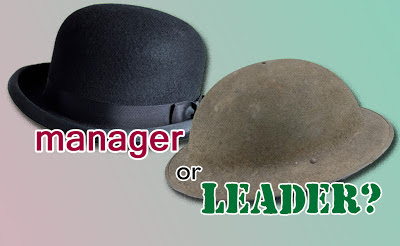
Manager or Leader? The Slim View

Image
In the field of management science and in organisational development in particular we often talk about the differences between managers and leaders. Every now and then I come across great little snippets and insights from outside the field that add to the conversation. And here is one of those from the field of military history, a place to which my reading commonly wanders and where the rich tapestry of leadership is a theme that is commonly discussed. Less common though is for this field of study to throw up a direct comparison between leaders and managers.  The British General William 'Bill' Slim was the master of successful military campaigns against the Japanese in the Far East during the Second World War and the leader of what is often called the "Forgotten 14th" Army. Slim, with excellent credentials of success both in terms of strategy and leadership saw a keen difference between leaders and managers. Slim's comparison runs as follows: "The lea...

Getting started with delegation

Image
The Art of Delegation I don't often blog about management tips, but when I talk to experienced managers and leaders about what challenges them in their working lives one of the consistent responses I get (and one that is often reinforced when speaking to their teams) is that they have trouble delegating work. This always surprises me. Not only that, but everyone involved seems to accept this weakness with a smile and a shrug of the shoulders as if to say, 'oh well, it is just the way they are'.     When I question them about this attitude. A common response by those self-confessed bad delegators is to justify the lack of concern by stating that they avoid delegation because they believe that passing the job to somebody else takes too long. How many times have you heard people around you say “ It’s quicker to do it myself ”? Often, this is offered as a justification for them choosing to perform a piece of work that they know could have been per...