Posts

Showing posts with the label change

Forum Theatre

Image
Old Bill Shakespeare knew a thing or two about most things, but not even he dared to combine theatre with performance management.  Forum Theatre is a style of drama pioneered by the radical, innovative and influential Brazilian dramatist Augusto Boal. First created as a way to explore how people can change the world around them Forum Theatre is used to allow audiences to take over the direction of events, allowing the audience to direct the actors in an attempt to change the outcome of events on stage. In its purest form an audience member interjects at any time in the play and steps up to take the place of the characters, or to suggest what the character should do next. The play then goes on following this new approach.  Radical? Possibly. Chaotic? Definitely. Applicable to organisational development and learning? Absolutely! At Poppyfish we can apply Forum Theatre in any context where individuals are attempting to ‘learn’ a new process or technique, especially wher...
The Culture Box

Image
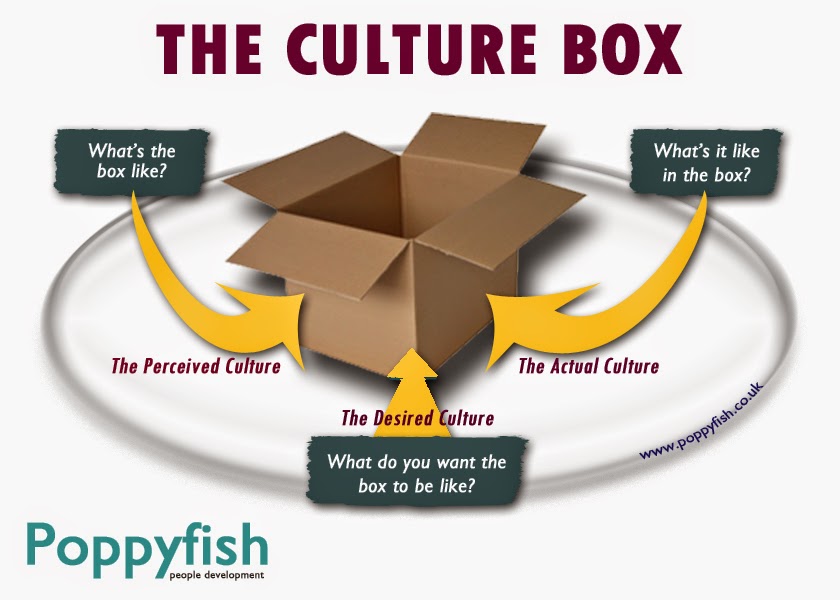
Organisational culture can be a confusing topic, especially for those who have never come across it before. Those of us who ponce around talking about leadership and organisational dynamics tend to forget that, for many, culture is a bit of a buzzword. Often, others associate culture with going to the ballet or liking opera, not to “the way we do things around here”. So to help us explore the ideas around culture with those who have never encountered it before we’ve developed the idea of The Culture Box . It works as a great metaphor for organisational culture and doubles up as a fun group exercise for teams getting started with the concept of culture.  So how does it work?  The Culture Box Exercise For this exercise you will need a large cardboard box. The larger the better. Ideally you can use one that’s large enough for one or two members of the group to sit in. Then, with the box placed in the centre of the room, enlist your volunteer(s) and sit them in the box. If ...

Behaviour Change - old habits die hard

Image
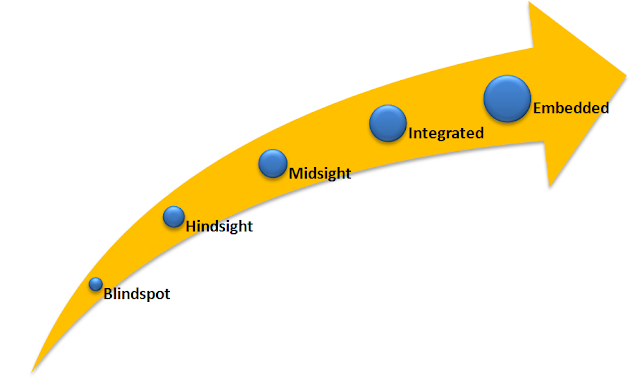
Ever wondered why giving up that bad habit is so hard? This short entry looks at behavioural change and is driven by a piece of work I have been doing with one of my clients. Our habits – good and bad - are embedded behaviour that we have been slowly adapting throughout our lives. Changing habits is difficult and requires commitment. There is a saying that habits cannot be thrown out of a second floor window. Instead, they must be coaxed patiently downstairs and out through the door. This takes time, and it takes application. But above all else, it needs us to realise that change is needed.   The change curve diagram on this page (with kudos to Martin Saville who first ran through this with me as I began my own change journey) shows us the path of behavioural change. To complete any behavioural change we must move from being unaware of the need to change, and on through a commitment to change towards a complete embedding of the new behaviour. Easy eh? ...

OD Consultant? What's that?

Image
A  few weeks ago I had to renew an insurance policy using a new online form. One of the questions the website wanted me to answer was " What is your job ?". Next to the question was a drop down list on which there were, quite literally, hundreds of options. The list included some familiar occupations: Accountant, Actuary, Receptionist, Welder, Priest, Car Mechanic and Quantity Surveyor, etc were all listed. Scattered among them were a host of other more unusual ways to earn a crust including: Axeman, Astronaut, Chicken Chaser and Chicken Sexer.  I was so absorbed by some of these the amazing sounding jobs that I must have I scrolled up and down the list over a dozen times. I was amazed at its thoroughness. It seemed that just about every profession, or in some cases, bizarre fetish, that you could imagine, was listed.   But Organisational Development Consultant wasn't on the list.   T he suggestion that there are more astronauts tha...

I Don't Like Change

Image
  Maybe using different words can bring different outcomes  This short entry is inspired by, if not directly stolen from, a quality conversation I enjoyed on the Riverside Terrace Cafe of the Royal Festival Hall this week.... The words we use are important. Many words have connotations and meanings that influence the way that we feel about them. Consider this conversation for instance: Tom: "I don't like change" Sally: "Oh really? So what would happen if you won the lottery tomorrow?" Tom: "You wouldn't see me for dust" Sally: "So you do like change?" Tom: "Well no, I don't like change, but that wouldn't be change as such, that would be a win" Sally: "So a change can't be for the better?" Tom: "Not like that, I mean, it would be great to start something new, something I could really make a go at" Sally: "So change is OK if it improves things?" T...