Posts

Showing posts with the label shared understanding

The Culture Box

Image
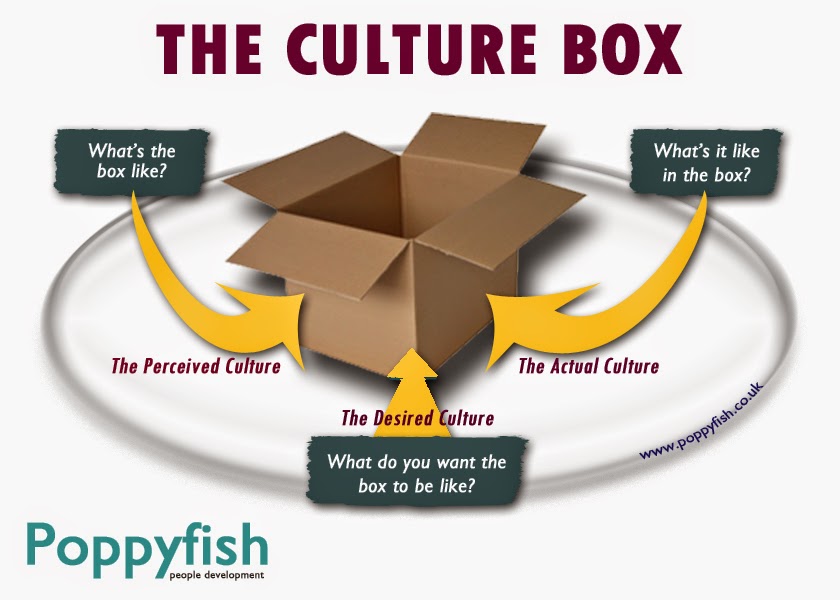
Organisational culture can be a confusing topic, especially for those who have never come across it before. Those of us who ponce around talking about leadership and organisational dynamics tend to forget that, for many, culture is a bit of a buzzword. Often, others associate culture with going to the ballet or liking opera, not to “the way we do things around here”. So to help us explore the ideas around culture with those who have never encountered it before we’ve developed the idea of The Culture Box . It works as a great metaphor for organisational culture and doubles up as a fun group exercise for teams getting started with the concept of culture.  So how does it work?  The Culture Box Exercise For this exercise you will need a large cardboard box. The larger the better. Ideally you can use one that’s large enough for one or two members of the group to sit in. Then, with the box placed in the centre of the room, enlist your volunteer(s) and sit them in the box. If ...
How we learn from critical incidents

Image
The tragic and ongoing story of Malaysia Airways flight MH370 has few positives. At the time of writing it appears highly likely that the aircraft, which disappeared on 8 March as it flew from Kuala Lumpur to Beijing, ditched somewhere in the sea off the SW coast of Australia, many miles off course  from it’s planned route. No wreckage has been found and there has been no communication with any of the 239 people listed as being on board. No reason for the massive deviation in the flight plan or the loss of communication has been provided. What continues to unfold is a fascinating and disturbing tale that has flummoxed just about everyone. But what we have already experienced as part of this story helps us expand our understanding. And here's how. As humans we rely on our skills of pattern recognition to make sense of the world around us. When stories and events unfold we look to the validity of our own experience to assess the situation against our own memory banks of data, h...

Sharing Best Practice: Learning from Ugg and Thugg

Image
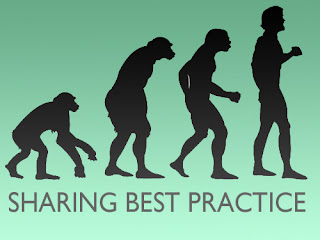
The Neanderthals sat huddled round the fire. The soft orange light reflected from the walls of the large cave in which they were gathered, giving an eerie light to proceedings.   From the walls of the cave the dull handprints and paintings of the top mammoth hunters from all ancestry hung over the group, reminding them of just why they were here.      Ugg gruntedfirst. He grunted of how he and his team of hunters had worked all day to corner the great mammoth whose carcass now filled their bellies. It was the first time they'd eaten mammoth in many moons. The other hunters sat and listened as Ugg told the tale of how he, newly returned to the community from sabbatical work with the tribe on the other side of the stream, demonstrated how he had used his new "cat-a-pult" process to maximum effect to bring down the giant beast. They listened in awe. "Cat-a-pult". What a strange device.   The hunters glanced uneasily at each other as Ugg handed round the n...

Biodecision: The First Workshop

Image
A room full of scientists and technology transfer professionals may not be everyone's idea of a fun filled afternoon but anyone who attended the first Poppyfish Biodecision Simulation Workshop earlier this month would hopefully agree with me when I say that what was shared that afternoon was informative, fun and filled with learning.   This proof of concept workshop for Biodecision was the first time that this particular workshop had been held and took place at Rothamsted Research with the support of  InCrops .  Aims The aim of the Biodecision workshop is to create a system in miniature and to explore how people and organisations within the system interact and make decisions. The system in question is the commercialisation system for new technology. In this instance we chose fictional patented developments associated with the fictional biofuel, 'Cropanol', but this topic could vary depending on the audience. We split the fifteen delegates into s...

I Don't Like Change

Image
  Maybe using different words can bring different outcomes  This short entry is inspired by, if not directly stolen from, a quality conversation I enjoyed on the Riverside Terrace Cafe of the Royal Festival Hall this week.... The words we use are important. Many words have connotations and meanings that influence the way that we feel about them. Consider this conversation for instance: Tom: "I don't like change" Sally: "Oh really? So what would happen if you won the lottery tomorrow?" Tom: "You wouldn't see me for dust" Sally: "So you do like change?" Tom: "Well no, I don't like change, but that wouldn't be change as such, that would be a win" Sally: "So a change can't be for the better?" Tom: "Not like that, I mean, it would be great to start something new, something I could really make a go at" Sally: "So change is OK if it improves things?" T...